
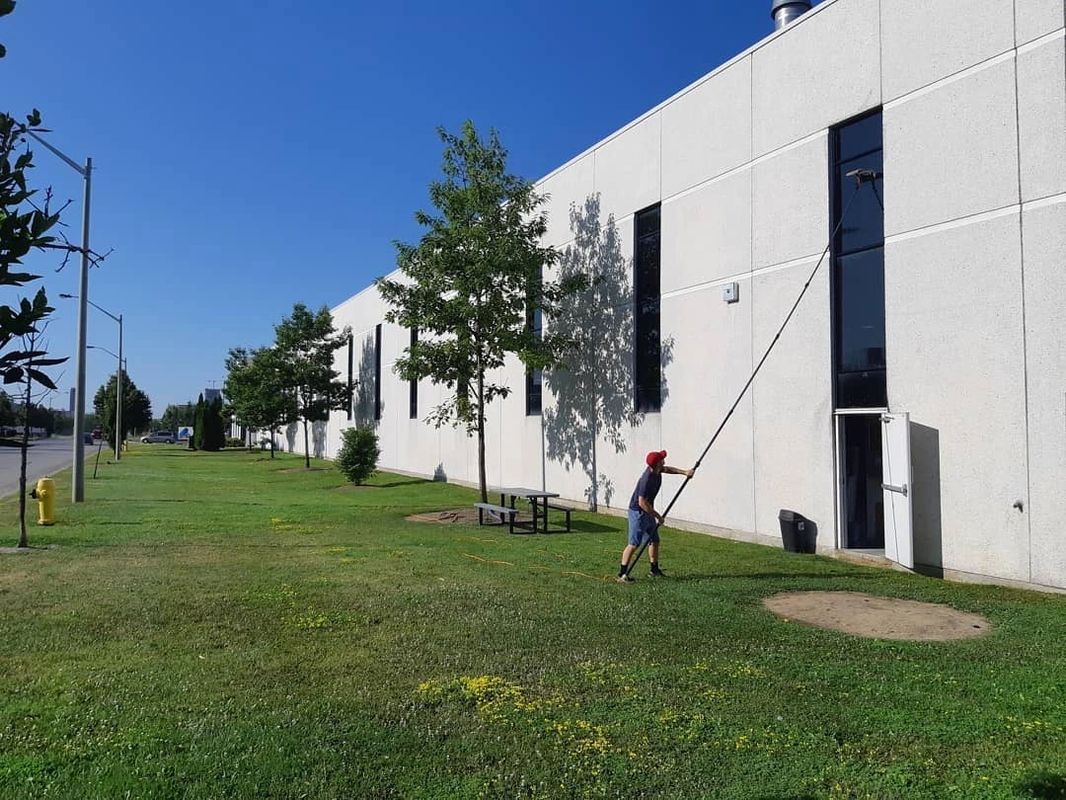
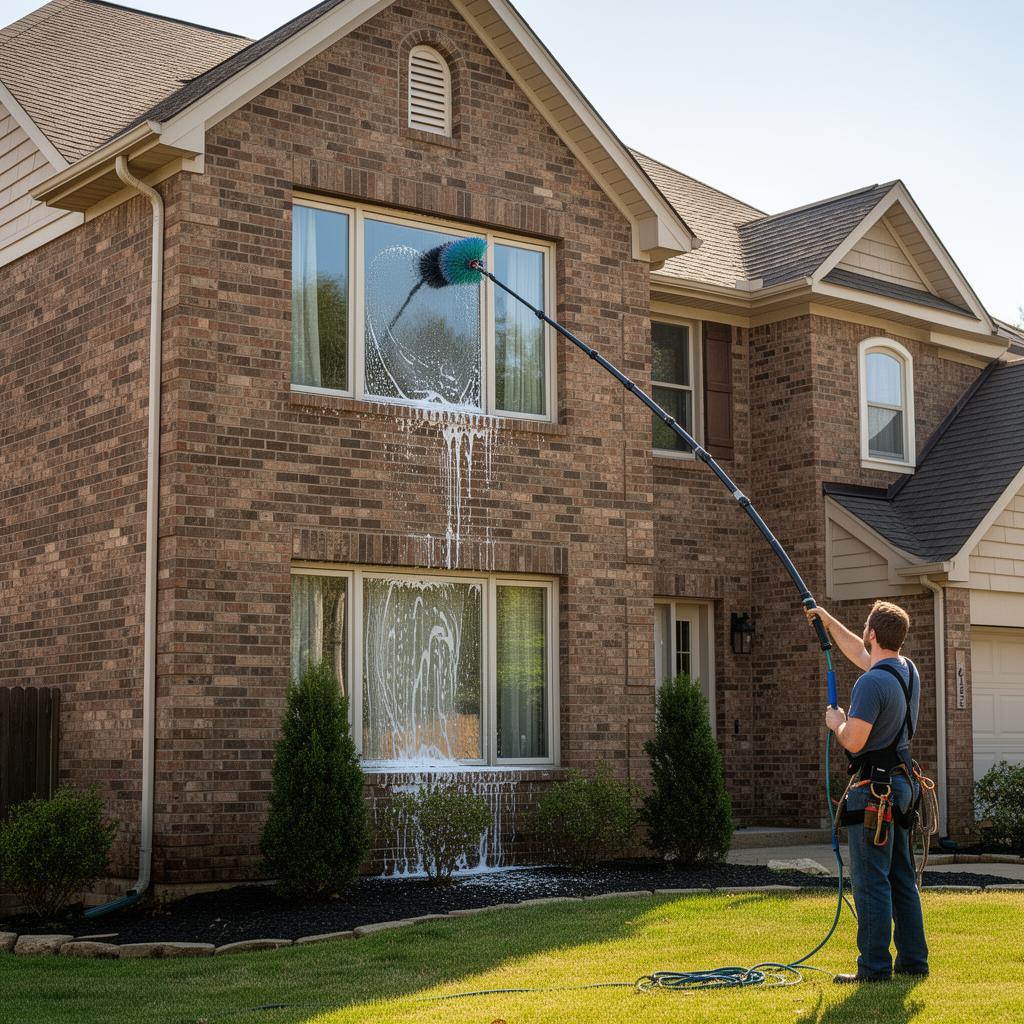
A water-fed pole (WFP) system is a window cleaning setup that uses a long, lightweight carbon-fibre or hybrid pole with a soft brush and water jets on the end. Instead of soap, a squeegee, and a ladder, the pole feeds 100% pure water straight onto the glass, the brush agitates the dirt, and the rinse leaves the window spot-free as it dries.
It's the same technology you've probably seen on storefronts, schools, condos, and second- and third-storey homes across the GTA. The reason it has become the default for professional exterior window cleaning comes down to two things: water chemistry, and not having to lean a ladder against your house.
How "pure water" actually cleans
Regular tap water in Toronto and the GTA contains dissolved minerals — calcium, magnesium, sodium, silica. When that water dries on glass, the water evaporates but the minerals stay behind. Those white streaks and spots you sometimes see after rain or a sprinkler hit? That's mineralized tap water drying on the surface.
A water-fed pole system runs municipal water through a multi-stage filtration train — typically a sediment filter, carbon block, reverse osmosis (RO) membrane, and a final deionization (DI) resin stage. By the time the water reaches the brush at the top of the pole, it measures 0 parts per million (TDS) of dissolved solids.
Pure water is chemically "hungry" — it actively pulls dirt, pollen, and pollution off the glass. The brush loosens the grime, the jets flush it down the frame, and because there are no minerals left in the rinse water, the glass dries on its own without streaks, spots, or residue. No squeegee pass required.
Why it beats the old ladder-and-squeegee method
No mineral deposits, no soap film, no detergent residue attracting dust the next week.
Technicians stay on the ground. No siding dents, no broken trim, no liability from a ladder slipping on wet grass.
Soap-and-squeegee dries too fast in summer sun and streaks. Pure water rinses evenly even on a hot afternoon.
The brush and rinse take grime off the window frames, sills, and screens — not just the glass.
No detergents in the runoff. Safe around gardens, ponds, pets, and kids' play areas.
A modern WFP setup safely reaches second- and third-storey windows, atriums, and many low-rise commercial buildings from the ground.
The safety case (this is the real one)
Most serious window-cleaning injuries are ladder falls — not elaborate rope-access accidents. Every time a technician leans an extension ladder against a soft eavestrough or steps off onto a wet rung, the odds get worse. Water-fed poles eliminate the most common dangerous step entirely: for any second-storey work we used to climb to, we now stand on the lawn or driveway.
For homeowners, that means fewer ladder marks on siding and stucco, no boot prints on the roof, and no insurance headaches if something goes wrong. For technicians, it means a longer career without knee and back damage from hundreds of ladder ascents per season.
When water-fed pole is the right call
Water-fed pole is the default exterior method we recommend for:
- Two- and three-storey homes with standard glass
- Houses with delicate landscaping, garden beds, or fragile eavestrough that ladders would damage
- Storefronts, low-rise offices, schools, and clinics
- Solar panels and skylights, where ladder access is risky and soap residue cuts efficiency
- Windows that were last cleaned with a hard-water sprinkler hit, where pure water can lift the staining over a few visits
Interiors still get the traditional treatment — microfibre, squeegee, and a careful detail of the frame and sill. And for anything taller than about four storeys, we coordinate with licensed swing-stage or rope-access partners. WFP is a tool, not a religion.
Common questions
Yes — that's the entire point. As long as the TDS reading at the brush is 0 ppm, there is nothing left in the water to leave a streak when it evaporates. We test our DI output before every job.
The pole and pure-water filtration work year-round, but freezing temperatures turn the rinse into ice on the glass. In the GTA we generally pause exterior WFP work below roughly -5°C and pick back up on the next mild stretch.
Light, recent mineral spotting often clears up over one or two visits with pure water. Heavy, baked-on hard-water stains usually need a dedicated restoration treatment first — see our hard-water stain removal service.
No. It's filtered municipal water with nothing added. Some homeowners actually like that their hostas get a free watering.
The filtration unit, DI resin, carbon-fibre pole, and pure-water tanks are real equipment costs, and the method is genuinely safer and cleaner. You're paying for the result lasting weeks longer between cleanings, not just the visit.
The bottom line
A water-fed pole system is the modern way to clean exterior glass: pure water, a soft brush, and a long pole instead of soap, a squeegee, and a ladder. It dries spot-free, it's safer for the technician and your property, and it works on the kinds of homes and buildings most ladders shouldn't be touching in the first place.
If you'd like to see it on your own windows, we cover the entire GTA. Get a free quote and we'll let you know whether WFP is the right method for your property — or if a hybrid approach makes more sense.
Ready to see spot-free glass?
Book a water-fed pole cleaning across the GTA.